I have been doing this since 1999. Not in that "I printed a website once" way. I mean actually building digital infrastructure for businesses, watching them install software they never use, paying for platforms that require a full-time administrator just to keep the...
What Ledo Everywhere Actually Means (And Why We Built It This Way)
I have been doing this since 1999.
Not in that “I printed a website once” way. I mean actually building digital infrastructure for businesses, watching them install software they never use, paying for platforms that require a full-time administrator just to keep the lights on. I have seen the whole arc of this industry. The promise of every new tool. The graveyard of abandoned dashboards. The moment a client shows me their CRM and the last entry was from eight months ago.
That is the problem I have been trying to solve for most of my professional life. Not with better training. Not with longer onboarding docs. With architecture.
So when Jay and I started building Ask Ledo LLC, we were not building another CRM. We were building a different premise about where intelligence should live.
LeadMachine is what came out of phase one. It is an AI-first CRM for small business — not retrofitted with AI features but built from the ground up around an AI assistant named Ledo who actually runs the pipeline. He monitors leads, enriches contact data automatically, tells you who to call and why, and preps you before every conversation. He does not wait to be asked. That is the point.
Phase two is what we are calling Ledo Everywhere, and it is the thing I actually want to talk about here.
The Problem With How AI Gets Deployed
Most AI tools are built around a single assumption that I think is fundamentally wrong. The assumption is that you will go to the AI. You will open a tab, drag your context in, ask a question, and bring the answer back to wherever the real work is happening.
That model works fine for generating a first draft or answering a research question. It does not work for running a business.
The context a business actually needs — customer history, pipeline status, open quotes, support tickets, seasonal patterns, staff capacity — that context is scattered across eight different systems right now. Assembling it every time you need a decision made is not a productivity gain. It is a different shape of the same problem.
What Jay and I kept coming back to was a simpler question: what if the intelligence came to the data instead of the other way around?
That is Ledo Everywhere.
What the Architecture Actually Does
The intelligence layer inside LeadMachine — the enrichment engine, the conversational interface, the logic that takes incomplete, messy pipeline data and produces a clear next action — that architecture was deliberately built to be decoupled from the CRM application itself.
We did not know exactly where Ledo would go next when we built it that way. We knew he would go somewhere.
Ledo Everywhere takes that capability and makes it available as an embeddable layer for other platforms and business environments. The idea is not that every business needs to replace their existing systems with LeadMachine. The idea is that Ledo can operate alongside whatever is already there. He comes to where your data lives, learns the shape of your business from what is already present, and starts producing the kind of clear, actionable signals that most business owners are currently not getting from any system they own.
You do not configure it to understand your business. It figures that out from what is already there.
If that sounds abstract, the proof of concept is live. Jay built a NASCAR race predictor called MW vs Machine that runs Ledo’s intelligence layer against driver stats, track conditions, weather, and historical momentum, simulates 10,000 race outcomes, and produces a winner prediction. It has nothing to do with sales pipelines. It uses exactly the same reasoning architecture. That is the point. Ledo’s intelligence is not about CRM. It is about taking a complex data environment and surfacing the one thing that matters next.
What This Means for the Businesses We Work With
From the Avalanche Media Works side of this, Ledo Everywhere changes what I can offer consulting clients in a significant way.
I have spent 25 years helping businesses build their digital presence. The work has always been good. The frustration has always been the same: we build the thing, the client uses it for a while, the operational drag sets back in, and six months later they are back where they started. Not because the strategy was wrong. Because the infrastructure did not hold.
What Ledo Everywhere makes possible is a different kind of engagement. Instead of building a website and a content strategy and a CRM workflow and hoping the client executes consistently, I can build Ledo into the environment itself. He handles the operational layer. He monitors what is happening, flags what matters, and works the routine so the humans do not have to.
That is not a feature. That is a different category of service.
The agencies and consultants who figure this out early are going to have a substantial advantage over everyone still selling deliverables. Because deliverables are not what clients actually need. They need systems that keep working after the engagement ends.
The Calm Operator Principle Applies Here Too
Jay and I have written about the Calm Operator philosophy separately, and I want to be clear about why it is not just a marketing frame. It is a design constraint.
The natural objection to “AI embedded in more of your business environment” is that it means more noise. More notifications. More things flagging for your attention. More AI decisions you now have to audit.
If that is how it worked, we would have made the problem worse.
The Calm Operator principle is that AI should reduce the number of decisions sitting on your plate, not increase them. It should handle the routine things completely, flag the genuinely important things clearly, and stay out of your way about everything else. The goal is an operational environment where you have to think less often, and the things you do have to think about are actually worth your attention.
Ledo operating across a broader data environment has to follow the same rule. One signal at a time. The rest handled in the background. No dashboard you have to manage. No new system to check.
The intelligence is the infrastructure. Not the interface.
What We Are Looking For Now
The architecture is built. The proof of concept is live. The SDK and API are in active development.
What we are working toward is the right early partners — platforms that want to offer their users AI-powered intelligence without building an AI team, agencies that want to operate Ledo-powered services under their own brand, and businesses that are ready to have Ledo working across more of their environment than just a CRM.
If any of that matches where you are, start at askledo.com. That comes directly to Jay and me.
If you want to see what Ledo actually does before thinking about the platform layer, the fastest path is LeadMachine. The 14-day free trial is free. No credit card. The experience of having Ledo work your pipeline for two weeks translates directly to understanding what Ledo Everywhere will feel like at broader scale.
The future of AI in business is not a smarter chatbot in another browser tab. It is intelligence that operates where your work already happens — and gets out of the way when it is done.
That is what we are building.
— Mike Fraser
Founder, Avalanche Media Works
Co-Founder, Ask Ledo LLC
More Basecamp Beacon Articles
What Ledo Everywhere Actually Means (And Why We Built It This Way)
Retail Relevancy: Building Customer Loyalty Through Social Listening
When I started working with local food trucks (zydecobistro.com) 😉 back 2010 it was like a reboot for me as a marketer. The goal was to add as many local “foodie” followers as possible and convert them into customers. Getting them to show up was actually pretty easy,...
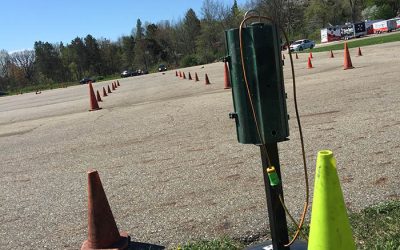
100 Hours Makes Your Teen Road Ready
Drivers Education sure has evolved since I took it back in the late 80's. I've had the pleasure working with DriveTeam for a long time now, with my youngest just finishing up their teen program called "Performance Based Driver Education" The difference between...